

ALL POSTS
ALL POSTS
Year of Espresso in Slovenia



3 min read
Last edit: Jan 8, 2026

Over the course of a year, espresso extractions across Ljubljana and Maribor were systematically measured using TDS, Extraction Yield (EY), and Espresso Brew Formula (EBF), then cross-validated through sensory analysis. The resulting dataset reveals not only individual shop performance but broader stylistic trends, origin preferences, and operational consistency within the Slovenian specialty coffee scene.
This report is a joint effort of specialtykava.si and SCA Slovenia (ZSKS)
This report highlights:
- dominant espresso styles in Slovenia
- most successful origins, processes, and cultivars
- and the Top 3 most consistent coffee shops of the year.
Find details about data gathering and analysis methodology in the first report.
Macro Trends Observed Across the Year
1. The Rise of “Modern Long Espresso”
Across both cities, a clear preference emerges for:
- Higher ratios (1:2.5–1:3+)
- Fast extractions (often below 25 seconds)
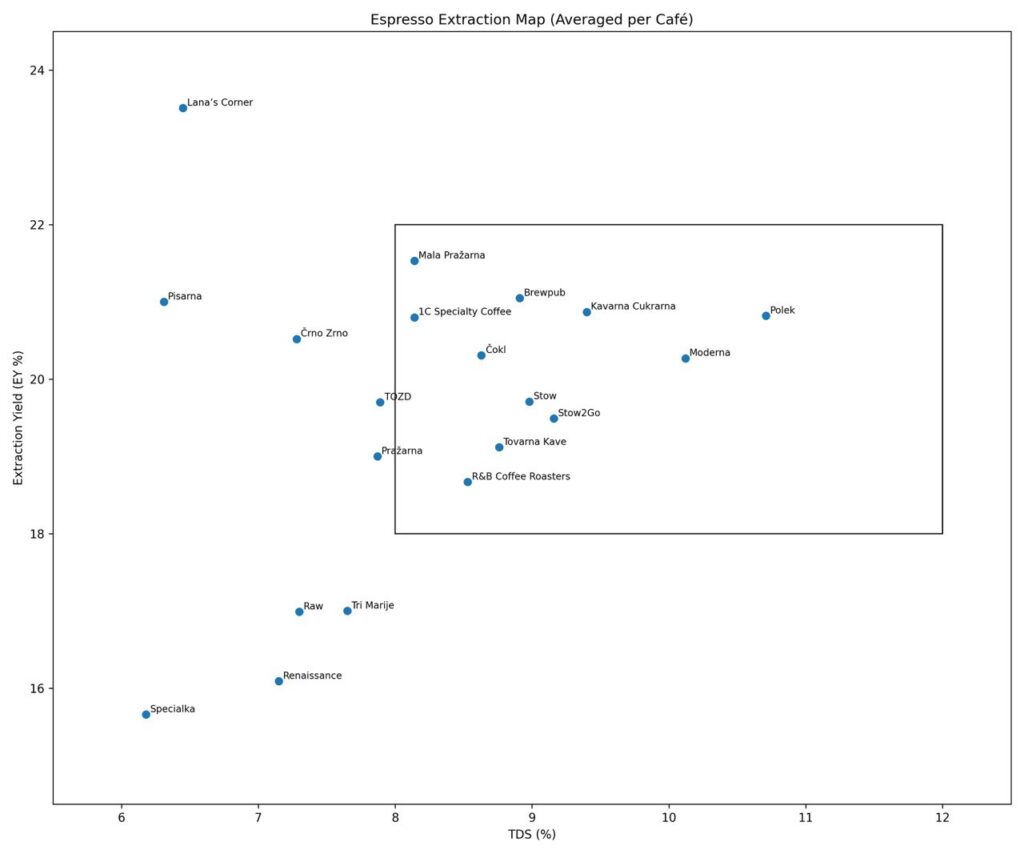
- Lower TDS, higher EY
While this style aims for clarity and approachability, the data shows it frequently leads to:
- diluted, watery mouthfeel
- hollow, short finishes
- increased astringency when EY rises without sufficient concentration
Key insight:
Many cafés achieve numerical extraction success but fail to maintain balance.
2. Channeling as the Dominant Technical Flaw
Repeated patterns point to channeling as the single biggest quality limiter:
- low TDS + high EY
- weak body + bitterness
- grassy, papery, raw nut notes
This appears consistently in cafés using:
- elongated ratios
- very fast shots
3. Sweetness Wins When Strength and Yield Align
The best shots of the year consistently fall into:
- TDS: 9.0–10.7%
- EY: 19.5–22%
- EBF: 45–50%
These shots deliver:
- syrupy texture
- layered sweetness
- controlled acidity
- clean but persistent finishes
This confirms that balance, not extremity, produces the highest sensory quality.
Most Popular Coffee Characteristics (Yearly Aggregation)
Most Popular Origin: Colombia
Followed by:
- Brazil
- Ethiopia
Colombia dominates due to:
- versatility across washed, natural, anaerobic
- compatibility with modern espresso styles
- reliable sweetness under varied extraction approaches
Most Popular Processing Method: Natural & Anaerobic
Followed by:
- Honey
- Washed
However, the data shows:
- Anaerobic coffees are the most mis-extracted
- Naturals perform best when TDS is kept high enough to anchor sweetness
Most Common Varieties / Cultivars: Caturra / Catuaí / Bourbon group
Followed by:
- Heirloom (Ethiopia)
- Mundo Novo
- Castillo
These cultivars exhibit the highest tolerance to modern extraction mistakes, while being widely found in high-yielding coffee-growing countries, which partly explains their dominance.
City Comparison: Ljubljana vs Maribor
Ljubljana
- Highly experimental
- Strong preference for anaerobic & co-fermented coffees
- Greater variance in quality
- More frequent under-extraction and dilution issues
Maribor
- More traditional espresso profiles
- Higher average TDS
- Better structural consistency
- Less experimentation, fewer failures
Conclusion:
Ljubljana drives innovation; Maribor delivers stability.
Top 3 Coffee Shops by Consistency
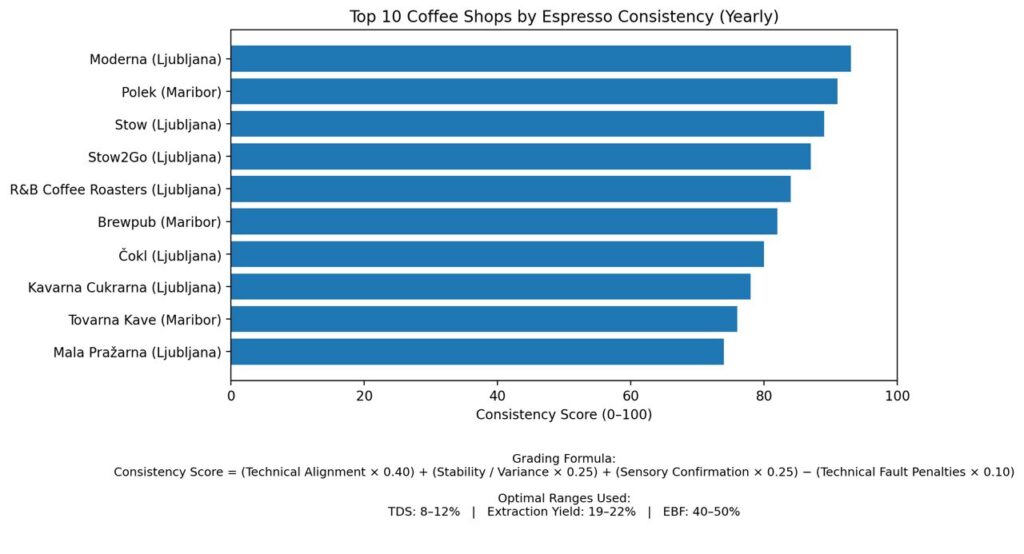
This ranking is based on:
- repeated appearances
- alignment of TDS, EY, EBF
- confirmation by sensory analysis
- minimal deviation across different coffees
1. Moderna (Ljubljana)
Why it wins:
- Multiple coffees consistently within optimal ranges
- Excellent alignment between theory and taste
- High TDS without harshness
- Clean dial-ins across origins and processes
Style:
- Modern specialty with discipline
- Signature: syrupy sweetness, controlled acidity
2. Stow (Ljubljana)
Why it ranks high:
- Repeated solid extractions
- Clear understanding of strength vs yield
Style:
- Contemporary, approachable, crowd-friendly
- Signature: chocolate, dried fruit, rounded profiles
3. Polek (Maribor)
Why it stands out:
- Best Ethiopian performances of the year
- High-TDS, high-clarity extractions
- Exceptional consistency with both blends and single origins
Style:
- Confident, technically precise
What the Data Clearly Teaches
What Works:
- Medium-long ratios only when strength is preserved
- Naturals with adequate concentration
- Ethiopia + honey/natural + higher TDS
- Slower, more deliberate extractions
What Fails Repeatedly:
- Fast shots under 25 seconds
- EY chasing without TDS control
- Over-elongated outputs (50g+)
- Anaerobics without structural grounding
Conclusion
The Slovenian specialty coffee scene is technically ambitious and stylistically modern, but often sacrifices structure for trend. The cafés that perform best over time are not those pushing boundaries hardest, but those that respect extraction fundamentals while adapting modern styles intelligently. Consistency, not novelty, remains the true marker of quality.