





ALL POSTS
ALL POSTS
History of Coffee: Balkans



4 min read
Last edit: Jan 12, 2026
Coffee has been a defining beverage in the Balkans for more than five centuries. Its role in the region extends beyond consumption and into social customs, hospitality norms, and daily structure.
Unlike many Western European countries, where coffee culture developed primarily in public cafés, the Balkan relationship with coffee evolved through domestic preparation and long-standing ritualized practices.
In this story, we will try to understand the history of the region, examine how traditional homemade coffee became embedded in everyday life, and how modern trends are now reshaping consumption.
Introduction of Coffee to the Balkans
Coffee arrived in the Balkans during the 16th century through the Ottoman Empire. Historical records indicate that coffeehouses began appearing in cities such as Sarajevo, Belgrade, and Skopje shortly after being included in the Istanbul sphere of influence.
The preparation method known today as Turkish coffee (cezva) became dominant due to its simplicity and compatibility with available tools and fuel sources. This brewing method relied on finely ground coffee boiled in water and served unfiltered. It required no specialized equipment beyond a metal pot and a heat source, which allowed it to spread rapidly across urban and rural areas. By the late 17th century, coffee consumption was common across most of the region.
Standardization of Coffee as a Ritual
Over time, coffee preparation became a standardized practice within households. Measurements, brewing time, and serving customs were consistent across generations and preserved as part of the family’s heirloom. Coffee was typically served in small cups, accompanied by water and occasionally sweets. This standardization formed the basis of what is now described as “coffee as a ritual”.
The domestic focus of Balkan coffee culture distinguished it from other European regions. Coffee was closely linked to hospitality practices, with serving coffee considered a basic social obligation when receiving guests. This reinforced coffee’s role as a daily, repeatable practice rather than an occasional indulgence.
Health Perceptions and Consumption Patterns
Throughout the 19th and 20th centuries, coffee consumption in the Balkans remained high. At the same time, discussions surrounding coffee and health emerged, particularly in relation to blood pressure, digestion, and sleep.
While these discussions were informal, consumption patterns adapted accordingly. For example, coffee intake was often reduced in the evening or after meals.
In recent decades, scientific research has clarified many of these concerns, contributing to a more structured understanding of caffeine metabolism. This has influenced the growing availability and acceptance of decaffeinated coffee in the region, as well as coffee substitute products.
Decaf products are now more widely consumed, especially among older demographics and individuals sensitive to caffeine, without disrupting established coffee rituals.
Industrialization and Market Expansion
The 20th century introduced industrial roasting and mass distribution. Ground coffee became widely available in retail packaging, allowing for longer storage and consistent flavor. During this period, storage practices were primarily based on convenience rather than quality, with limited attention given to how to store coffee to preserve freshness.
With big corporate entities establishing a hold over the Balkans, so too did an instant coffee start dominating patterns of coffee consumption. At the same time, Balkan markets were learning the difference between roast profiles and origins, albeit under the influence of Italian and Austrian coffee distributors.
Despite industrialization, the brewing method for traditional homemade coffee remained largely unchanged. This consistency allowed Balkan coffee culture to retain its core identity even as global brands entered the market.
Introduction of Specialty Coffee
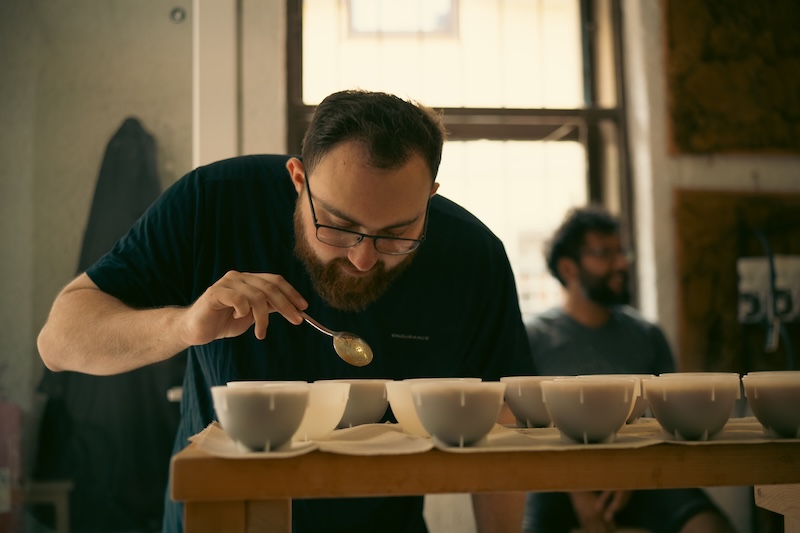
The early 21st century marked the introduction of specialty coffee into the Balkans. Small-scale roasteries and cafés began focusing on bean origin, roast profiles, and alternative brewing methods.
This shift introduced new parameters for evaluating coffee quality, particularly the flavor profiles of coffee, which expanded beyond bitterness to include acidity, sweetness, and aroma. With this, coffee academies, associations, and coffee-oriented events also started taking place.
This development led to increased comparison between traditional and modern coffee styles, often framed as a coffee vs discussion. Turkish coffee versus filter coffee, traditional blends versus single-origin beans, and home brewing versus café preparation became common points of comparison.
These comparisons reflect market diversification rather than cultural replacement. We did our own comparison story on Commercial and Specialty coffees here.
Current State and Future Outlook
Today, coffee consumption in the Balkans exists in a dual structure. Traditional homemade coffee remains dominant in domestic settings, while specialty coffee continues to grow in urban areas.
Decaffeinated coffee has become a stable category, supporting health-oriented consumption without altering cultural norms.
Education around storage, freshness, and sourcing has improved, aligning Balkan coffee consumption with broader European standards.
However, the defining characteristics of the region – slow preparation and consumption, tendency to like full-bodied and rich flavor profiles, and social integration – remain intact.
Conclusion
The history of coffee in the Balkans is characterized by continuity rather than disruption. Introduced through Ottoman influence, Turkish coffee became a standardized domestic practice that shaped social behavior and daily routines. Modern developments, including specialty coffee and decaffeinated options, have expanded choice without displacing tradition.
Coffee in the Balkans remains structured around ritual, consistency, and shared experience. Its evolution reflects adaptation to new information and market conditions while preserving its historical foundation.
Would you like to learn more about other coffee roasters in Slovenia? Here are the guides.